Contributor Posts

 "First, the shrimp disappeared. In late 1980s, the catch became so poor that Diane Wilson, a fourth-generation shrimper, had to take a job running a fish house in Seadrift in Calhoun County, Texas, where she grew up and still lives. Then beached, diseased 300-pound dolphins started appearing, and dead pelicans kept floating to the shores of Lavaca Bay"  More at Reasons to be Cheerful ➜

Wastewater processing facilities with advanced oxidization technology are now poised to make a significant difference on waste water treatment and purification More at Reasons to be Cheerful ➜ 

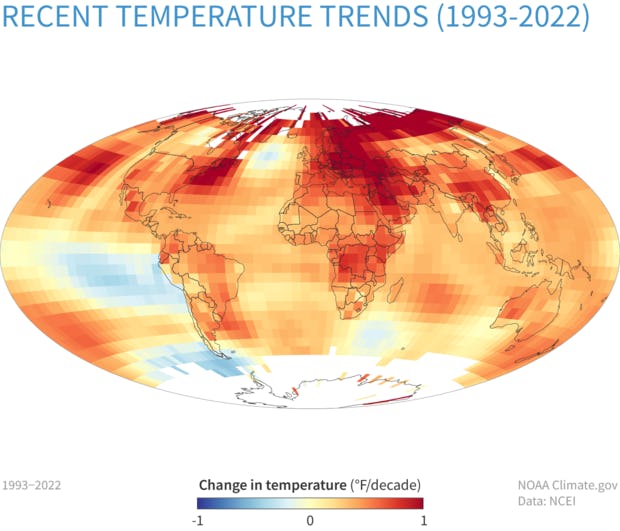
"Globally, 2023 has seen some of the hottest days in modern measurements, but what about farther back, before weather stations and satellites?" .... More at The Conversation ➜

"About 400,000 years ago, large parts of Greenland were ice-free. Scrubby tundra basked in the Sun’s rays on the island’s northwest highlands. Evidence suggests that a forest of spruce trees, buzzing with insects, covered the southern part of Greenland. Global sea level was much higher then, between 20 and 40 feet above today's levels".... More at The Conversation ➜

"The production of biochar is an ancient farming practice dating back thousands of years to the fertile Terra Preta soils in Brazil. A kind of black powder, used to improve soil health. it is made by heating up organic matter such as wood chips, manure, leaves, or indeed coffee husks, in a process known as pyrolysis. A study in 2010 found that 12 percent of global greenhouse gas emissions could be offset with biochar. Researchers in 2022 also found that mixing wood biochar with cattle manure can cut methane emissions — a huge contributor to climate change — by an astonishing 79 percent"  More at Reasons to be Cheerful ➜

"Samples collected from a well that serve more than 40 homes in the idyllic Hannah Heights neighborhood showed some of the highest levels of per- and polyfluoroalkyl substances, or PFAS, recorded in Washington" More at The Seattle Times ➜

California farmers are finding a new way to recharge aquifers. They are utilizing Atmospheric Rivers, which are long bands of water vapor that move in the atmosphere, to help get the job done. This method is more efficient, it helps restore ecosystems t and it may be a more sustainable solution. More at Reasons to be Cheerful ➜

Earth Day is an annual event celebrated on April 22 since 1970, to demonstrate support for environmental protection. It is an important reminder that we all have a role to play in protecting the planet. Together, we can create a more sustainable future for ourselves and for generations to come
Credit for the Earth Day idea goes to Gaylord Nelson, an American politician from Wisconsin and leading figure in the fight against environmental degradation and social injustice. "It may have been Gaylord Nelson’s idea, but American citizens made it happen”. Rachel Carson, a marine biologist and best-selling author provided the spark for this movement with the 1962 publication of her book, "Silent Spring" which showed the devastating effects of modern pesticides on the natural world. Read more about the origin of Earth Day

”Approximately one-third of the American diet, including many fruits, vegetables and nuts, relies on bees for pollination...."Recent studies indicate that “Bees are self-aware, they’re sentient, and they possibly have a primitive form of consciousness", More at the Guardian ➜

Across our broad galaxy,
soaring into outer space,
the thrust of rockets firing,
brings a smile to my face.

A celestial race,
to planets and stars,
on this long journey,
to the "Red" planet, Mars.

Is this the answer,
to our climate woes,
leaving the earth,
struggling with death throws?

Climate changes,
we must fight,
by replacing pollution,
bringing back the light.